Sum This (Summing mixers, Pt. 2)
From the original Analog Industries archive. Some links and images from that era no longer resolve.
Okay, time to address this tardiness issue. I really feel that if I smoked more cigarettes, my productivity would increase. I suppose the only way to know for sure is if I tried.
Anyways, back to the summing issue. There are three main flavors of summing mixers currently available. We’ll go in order, from simplest to most complex.
Plain Vanilla
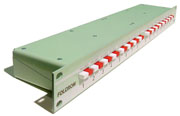
These sorts of summing mixers are totally passive. A passive summing mixer needs make-up gain, because (due to annoying features of physics) you lose volume when you mix channels together. The most popular example of a completely passive summing mixer is the Rolls Folcrom. This box is so passive, you don’t even need to plug it in. The concept with these sorts of boxes is that you use a pair of mic pres to make up the 30-odd db of signal loss. The “sound” of the summed mix is thus dependent on the quality and flavor of the mic pres you use. So, while the Folcrom is only $750, and thus the cheapest of the high-end summing mixers, you have to figure that you’re going to need at least two high-end mic pres; otherwise, there’s no point to the exercise at all.
A Little Bit Of Iron In The Path

By far, the most common sort of summing mixer is this flavor. These units have a passive summing array, but have built-in line amplifiers, thus obviating the need for mic pres on the output. The most popular of these is one of the first ones released, the Dangerous 2-Bus. At two and a half grand, it’s a bit of an investment, and only sums eight channels. Of this catagory, there are two general kinds: those that color the sound, and those that don’t. The D2B is definitely of the latter catagory, but there are several offerings in the price range that do add a bit of “vintage” color to the signal, whether your tastes run to tubes or iron. (For the former, the innerTube Audio Atomic Sumthang is a nice one. For the latter, probably the API 8200A is the way to go.)
The Full-Meal Deal

This catagory has the most cool shit in it, I’ll say that much, but “an arm and your left testicle” is the general price range. These sorts of summing mixers are basically small consoles with no mic pres. They’ll have, for the most part, transformer-balanced inputs, direct outs per channel, VU meters, and a simple console master section, usually with a couple monitoring options. Pictured, you see the Chandler Mini-Mixer, which is exactly that. My current favorite is the Aurora Audio GTM-822, made by Geoff Tanner, a former Neve engineer and all-around cool guy. These sorts of mixers can be used for other purposes than just summing, and are generally full-featured. There are about a dozen to choose from, and they generally fall in to the $4000 to $8000 price range.
The summing world is about to be turned on its ear, though. AMS/Neve is going to
announce a 16-channel full featured summing mixer with all the bells and whistles at AES for $3250. Figure a street of around $2750 to $3000 for this. This has become my new Object Of All Desiring. Now, AMS/Neve almost falls outside the scope of shit I would recommend, as they’re a bigger company than I normally like to talk about here, but quite frankly, I think this is the one to beat. I’ll throw pictures and such as soon as they’re available.
So, to sum things up (hardy har har) summing outside your DAW will give you obvious improvements in headroom, dynamics, “air,” and clarity. However, it isn’t cheap. If you make electronic music exclusively, this probably won’t be a big enough gain to justify the expense. However, if you’re mixing “real” music, and you’re not using the only DAW with a summing buss worth a shit (HTDM PT), you’re definitely going to see that the expense is worth it by introducing an analog summing process to your mix. It’s a matter of choosing the unit that most fits your budget and what you’re trying to accomplish. I personally believe that the mini-mixer variety gives you the most options, but you can get away with some significantly cheaper solutions.
A link to all of Mercenary’s options was put in the comments of the last summing article. I’ll throw it again, and say once more that research is your best friend here. Gearslutz is the spot to be in this regard, as there are lengthy threads on the pros and cons of every single summing product, as well as many threads on summing itself. (Hint: use “OTB” as your search term, “outside the box.”)
Comments
Comments are closed on this post.